Sony Xperia 10 VIII vs Xperia 10 VII: what changes and who should switch
Sony announced the Xperia 10 VIII on 25 August 2026. Does it change your choice, or does the Xperia 10 VII already do the job? On the main specifications, nothing changes: the chip, memory, storage, cameras and battery capacity carry over. Sony's release highlights display and speaker tuning, a camera button, a quick-access payment menu and Android 16.
Three facts shape the answer. If you own a working Xperia 10 VII, a new generation number is a weak reason to switch. In the one lab battery test we found, the Xperia 10 VIII lasted about 17% less than the Xperia 10 VII in standardised Wi-Fi browsing, with the same battery capacity. And the launch price rose by roughly a third. A switch should fix a specific problem you have today. The Xperia 10 VIII does suit you if you want a lightweight phone with front-facing stereo speakers, a headphone jack, removable storage and familiar software.
refurbed does not list the Xperia 10 VIII or the Xperia 10 VII, but the Xperia 10 VI and the Xperia 10 V are available now, and so are two rival phones, the Pixel 10a and the Galaxy A57 5G. Refurbished means professionally checked, cleaned and reconditioned, and hardly distinguishable from new.
Keeping a suitable phone in use is also the more defensible choice for the environment than buying a new one, and Sony publishes no carbon figure for the Xperia 10 VIII. Battery results, software support, three rivals and the environmental facts follow, so you can decide whether to switch, stay or buy an older Xperia 10 refurbished.
Sony Xperia 10 VIII price, release date and specs: what Sony confirmed
Sony announced the Xperia 10 VIII on 25 August 2026 and planned availability from mid-to-late September in the markets its release covers, so check stock in your own country. The launch coverage blurs a few details, and Sony's own pages settle them.
Price: Sony's release gives €599 for the euro area markets it covers and £549 for the UK. It gives these two prices only, and a US price quoted in some coverage is not confirmed. These are launch prices, not today's shop prices, and not every country used the same offer.
Body and screen: 153 x 72 x 8.3 mm, 168 g, and a 6.1-inch screen with 1080 x 2340 pixels.
Platform and memory: a Snapdragon 6 Gen 3 chip, 8 GB of RAM plus up to 6 GB of virtual memory, 128 GB of UFS storage and a microSDXC slot for cards up to 2 TB. It launches with Android 16.
Cameras: a 50 MP main camera (1/1.56-inch sensor, 24 mm equivalent focal length, f/1.9, optical stabilisation), a 13 MP ultrawide camera (16 mm equivalent focal length, f/2.4) and an 8 MP front camera. Sony's material also mentions a 48 mm equivalent focal length. It comes from zooming the wide camera, not from a separate telephoto lens, so it is not equivalent to a dedicated telephoto camera. Pixel counts alone cannot show which phone takes better pictures.
Battery, sound and ports: a battery with a typical capacity of 5,000 mAh and USB PD fast charging, a 3.5 mm headphone jack, front stereo speakers, NFC, Wi-Fi 6E, Bluetooth 5.4 and USB 2.0 over USB-C. Sony's release describes the speaker change as about 15% more volume overall and more than 30% more bass, not a uniform 30% louder sound. Loudness, bass and clarity are different measures.
Everyday features: a dedicated camera button and a quick-access menu for payment and rewards cards. Their value depends on how often you use them. They are usability features, not extra computing or camera hardware.
Storage in practice: a memory card can hold a large local media library, but it does not make internal storage irrelevant, because apps and system data still need it. Virtual memory, which uses storage as extra RAM, does not replace the capacity or speed of physical RAM. The headphone jack keeps wired headphones you already own useful, without another charged accessory.
Sony Xperia 10 VIII vs Xperia 10 VII: what changed and what stayed the same
On the main specifications, nothing changes between the Xperia 10 VII and the Xperia 10 VIII.
Unchanged from the Xperia 10 VII: the Snapdragon 6 Gen 3 chip, 8 GB of RAM and 128 GB of storage, the 50 MP main and 13 MP ultrawide cameras with the 1/1.56-inch main sensor, the 5,000 mAh battery, the 153 x 72 x 8.3 mm body and the screen format.
What Sony highlights for the Xperia 10 VIII: Android 16 at launch (the Xperia 10 VII started on Android 15), display and speaker tuning, the camera button and the payment menu. Sony promises up to four Android upgrades, and the Xperia 10 VII promised four.
Price: in the euro area, the Xperia 10 VII launched at €449 and the Xperia 10 VIII at €599, which is €150 (33.4%) more. In the UK the prices were £399 and £549, which is £150 (37.6%) more.
What the numbers do not show: the unchanged platform does not support a claim of a major step in processing power. The higher price comes with display and speaker tuning and everyday features, not with a refresh of the expensive internal hardware.
If you own a working Xperia 10 VII: keep it unless one of the new features fixes a problem you meet often. The generation number alone is weak justification. If you are buying instead, an Xperia 10 VII at a favourable price can still give you most of what makes this line distinctive, so weigh it against the other options and check how much update time it has left.
If you own an Xperia 10 VI: the changes are larger. Your phone has the Snapdragon 6 Gen 1 chip, 48 MP and 8 MP cameras with a 1/2.0-inch main sensor, a 21:9 screen format, and a promise of three Android upgrades and four years of security updates. The Xperia 10 VII has the newer Gen 3 chip, 50 MP and 13 MP cameras with a 1/1.56-inch main sensor, a 19.5:9 screen format, and a promise of four Android upgrades and six years of security updates. Weigh that gap against the cost of service and the update time left on your phone.
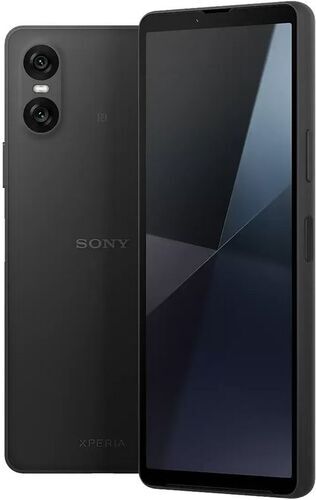
The refurbished route: the Xperia 10 VI (2024) and the Xperia 10 V (2023) are available refurbished on refurbed, and both predate the chip, camera and support changes of the Xperia 10 VII.
Sony Xperia 10 VIII battery life and charging: Sony's claim and the lab result
Sony's battery claim and the one lab test we found measure different things, so compare them with care.
Sony's claim: two days of battery life, based on six hours of mixed use and eighteen hours of standby each day. That scenario is not continuous browsing.
The lab result: Notebookcheck's standardised Wi-Fi browsing test gives the Xperia 10 VIII 19.8 h (19 h 50 min). In the same review's comparison, the Xperia 10 VII ran 23.9 h, the Pixel 10a 20.0 h and the Galaxy A57 5G 14.9 h. That puts the Xperia 10 VIII about 17% below the Xperia 10 VII, on the same 5,000 mAh capacity. Review dates, firmware and individual phones can differ, Sony supplied the review unit, and one review is not a verdict. Do not mix these hours with other makers' unspecified two-day claims.
Charging: the review fully recharged the phone in 69 minutes with its own 65 W adapter and recorded a charging power of 22 W. A news report gives 30 W, but Sony's specification lists USB PD fast charging without a wattage, so 30 W is not confirmed. An adapter's rating is not what the phone draws. For the rivals, the published figures are up to 30 W for the Pixel 10a, up to 45 W for the Galaxy A57 5G and 27 W rated (30 W peak) for the Fairphone Gen. 6+. Power alone does not decide charging time: the charging curve, temperature, adapter and cable matter too, so compare real charge times measured one way before treating a wattage gap as a benefit.
Your own day: an outdoor navigation day runs location services, radios and the screen together, which neither a browsing test nor a standby-heavy scenario reproduces. So do not assume that a newer phone lasts longer: with the same nominal capacity, this one ran shorter in the test. The Pixel 10a, which ran 20.0 h in the same comparison, is available refurbished.
Sony Xperia 10 VIII software support: how long each phone gets updates
The number of promised operating-system upgrades, the years of security patches, the patch frequency and a final support date are four different things, so do not collapse them into one score of years of updates.
Xperia 10 VIII: up to four Android upgrades and up to six years of security updates, according to Sony. Sony's footnote says the available period and upgrades vary with the purchase date, so the six years do not start again on a later purchase.
Xperia 10 VII: four Android upgrades and six years of security updates from release, according to Sony. A lower price has to be weighed against the update time left.
Xperia 10 VI: three Android upgrades and four years of security updates, according to Sony. That is the shortest window of the three Xperia 10 models, so check how much of it remains.
Pixel 10a: seven years of operating-system, security and Pixel Drop updates, according to Google.
Galaxy A57 5G: up to six Android generations and six years of security updates, according to Samsung, with market and model timing caveats.
Fairphone Gen. 6+: six Android upgrades and support through 2033, according to Fairphone. A fixed end year is more useful than assuming a new period starts on purchase.
A phone can stay physically sound while software compatibility or security support becomes the limit. The reverse also holds: a long update promise does not keep the battery and the charging port in working order without service, and it adds no storage space. Sony's consumer statement does not name a final Android version or give an unconditional end date for every regional model, and adding years to a launch headline would invent one.
Different clocks: Sony's entry in the EU's EPREL product database declares a minimum of five years of updates after the model leaves the market. The five years are counted from a different date than Sony's six years, so check the commitment for your exact model instead of counting launch plus six years. The Pixel 10a and the Galaxy A57 5G are available refurbished on refurbed, so a long support window does not have to mean buying new.
Sony Xperia 10 VIII vs Pixel 10a, Galaxy A57 5G and Fairphone Gen. 6+
Pixel 10a: a Tensor G4 chip, 8 GB of RAM, 128 or 256 GB of storage, a 6.3-inch screen, a 5,100 mAh battery, and 48 MP wide and 13 MP ultrawide cameras with Google's camera and editing features. It is the pick for software longevity and the Google camera workflow. Image quality needs scene-by-scene tests, not a megapixel ranking. The Pixel 10a is available refurbished.
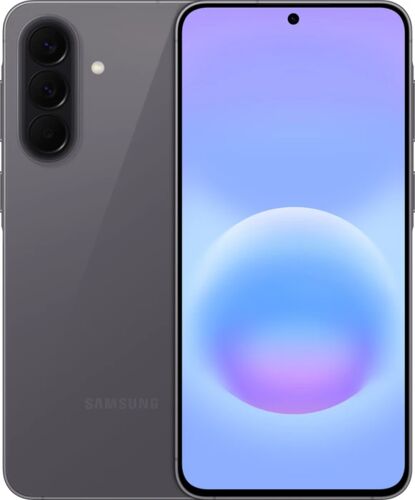
Galaxy A57 5G: an Exynos 1680 chip, a 6.7-inch screen, a 5,000 mAh battery, and 50 MP wide, 12 MP ultrawide and 5 MP macro cameras (the third is a macro module, not a telephoto). It has no memory-card slot. It is a larger mainstream phone than the Xperia. The Galaxy A57 5G is available refurbished.
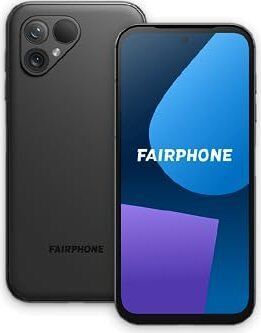
Fairphone Gen. 6+: announced on 18 August 2026, with a Snapdragon 7s Gen 4 chip, 12 GB of RAM, 256 GB of storage plus a microSD slot for cards up to 2 TB, a 6.31-inch screen, a removable 4,415 mAh battery and a 50 MP main camera. It is the pick for repairs that are easy to do or arrange and for long ownership, where serviceability may matter more than having the best camera hardware. The original Gen. 6, with an older processor and 8 GB of RAM, is the lower-price alternative at €599 in the euro area. refurbed does not sell the Gen. 6+, but the generation before it, the Fairphone 5, is available there refurbished.
Xperia 10 VIII: wide and ultrawide cameras only, a physical camera button and front-facing audio. It is harder to justify when you want the largest screen or the best gaming performance for the money, and easier to justify when physical size, audio, removable storage and controls define what you need. The older Xperia 10 V keeps the 3.5 mm headphone jack and a microSD slot (up to 1 TB), according to its product data.
Launch prices differ by market and are not a ranking: the Pixel 10a at USD 499 in the US, the Galaxy A57 5G at USD 549.99 in the US and €529 in Germany, and the Fairphone Gen. 6+ at €649 in the euro area. To compare real prices, use the same country, tax treatment, storage size and date for every phone.
Which one for whom: for a headphone jack, a card slot and a lightweight phone together, the Xperia 10 line. For updates and Google's camera workflow, the Pixel 10a. For a large mainstream phone with long support, the Galaxy A57 5G. For repairs that are easy to do or arrange, the Fairphone Gen. 6+. Check any AI feature list for account, language, network and region dependence: an online feature is not evidence of a faster chip.
Refurbished alternatives to the Sony Xperia 10 VIII: specs compared
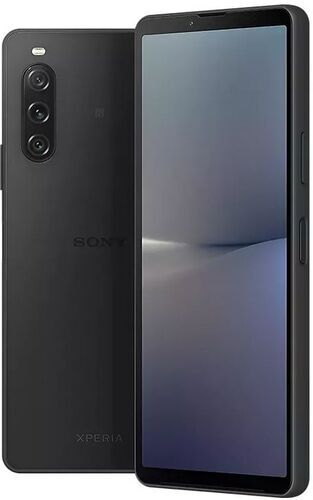
Screen size
6.1 inches
Weight
161 g
Battery
5,000 mAh
Main camera
48 MP
Memory card slot
microSD, up to 1 TB
Headphone jack
Yes
Release year
2023

Sony Xperia 10 VIII environmental data: what is published and what is not
Sony publishes useful battery and packaging claims, and the EU product record adds measurable data on battery cycles and on repairability. That does not establish a low carbon footprint or strong repairability. No life-cycle carbon figure and no total recycled-material percentage is published for the Xperia 10 VIII. Missing data is not proof of worse impact, but it rules out a numerical ranking against rival phones.
Materials and packaging: Sony says the Xperia 10 VIII uses recycled plastic and that its packaging uses paper plus Original Blended Material, made with bamboo, sugarcane fibres and recycled paper. For the Xperia 10 VII, Sony reported about 77% environmentally friendly resin in certain components, measured against a defined resin weight and with exclusions. That is not 77% of the phone, and it does not carry over to the Xperia 10 VIII.
The EU product record: Sony's EPREL entry for model XQ-GH54 lists a battery endurance of 53 h 13 min per charge, 1,400 cycles of endurance at default settings, a rated capacity of 4,850 mAh, a battery that is not user-replaceable and a repairability index of 1.82. These values are declared by Sony, not measured by anyone else. The rated capacity differs from the 5,000 mAh typical capacity in Sony's specification because the two are defined differently, not because the cell is defective.
What the figures mean: the European Commission defines cycle endurance as the number of charge cycles until usable capacity falls to 80% of its initial rated value, and endurance per charge as the result of a standardised usage procedure. So the registered endurance, Sony's two-day claim and the lab browsing test are three different kinds of figure. As arithmetic only, 1,400 full cycles at one a day is about 3.8 years, and at half that daily use about 7.7 years, before heat, charging habits, calendar ageing and use change the outcome. Sony's wording that the battery stays healthy for four years is a claim supported by simulations, not a promise of replacement.
Repair access: the repairability index is separate from endurance and efficiency. A user battery replacement process and a public price for battery, display or USB-port service are not verified for the Xperia 10 VIII, so get a service route and a quote before counting on a long life. Fairphone's modular design is more compelling for a do-it-yourself buyer, which does not prove that Sony repairs are impossible.
EU rules: for in-scope phones placed on the EU market from 20 June 2025, the European Commission describes at least 800 battery cycles at 80% retained capacity, critical spare parts for seven years after sales end and operating-system updates for at least five years after final placement. These are EU rules for phones placed on the EU market, so they say nothing about other countries.
Longevity: a fixed manufacturing impact divided by more years of use gives a smaller yearly share. That is an accounting relationship, not a measured saving. A phone that already exists, such as a refurbished Xperia 10 VI or Xperia 10 V on refurbed, has its manufacturing impact behind it, and each extra year of use spreads that impact further.
Sony Xperia 10 VIII environmental comparison: rivals, carbon claims and keeping your phone
What the rivals publish: for the Pixel 10a, Google reports at least 36% recycled material by weight, 100% recycled aluminium in the housing and a back cover of at least 81% recycled plastic. The aluminium and plastic percentages describe single parts, not the whole phone, and repair availability is regional. For the Fairphone Gen. 6+, Fairphone reports 12 user-replaceable parts, support through 2033, a removable battery and 51% fair and recycled material by weight. That 51% covers fair and recycled material combined, so it is not a share of recycled content, and Fairphone's e-waste-neutral wording describes a programme, not a phone without waste. For the Galaxy A57 5G, Samsung promises six years of security updates, and no comparable model-specific carbon assessment was found. The generation before the Gen. 6+, the Fairphone 5, is available refurbished.
Comparing carbon claims: a fair comparison needs a common reference life, charging assumptions, included accessories, a repair scenario and one system boundary. Offsets and recycling programmes belong apart from the emissions of making the device. That Sony publishes no carbon total does not make it better or worse than a rival: it means a ranking would go beyond the evidence.
Keeping the phone you have: the effect of switching depends on what would happen without the purchase. Keeping a working, supported phone, with a battery service if needed, may avoid a replacement handset, while an unusable or unsupported one is no longer the same alternative. As an illustration only, take an assumed fixed manufacturing impact of 60 kg CO₂e, which is not a measured Xperia figure. Spread over two years of use it is 30 kg a year, over four years 15 kg a year and over six years 10 kg a year. That leaves out charging, repairs and end of life.
Real-world conditions: the screen, location services, radios and chip can all run at once, so a nominal battery capacity does not settle runtime outdoors, and no operating or charging temperature limit was verified for the Xperia 10 VIII. Regional bands, operator support and weak signal affect use, so confirm the exact model number and your operator. A headphone jack keeps existing wired headphones useful, a plausible benefit and not a quantified carbon saving. Authorised service and parts availability vary, and a long update promise is most useful when the hardware can also be maintained.
Sony Xperia 10 VIII FAQs
When was the Sony Xperia 10 VIII released?
Sony announced it on 25 August 2026 and planned availability from mid-to-late September in the markets its release covers. Check stock in your own country.
How much does the Sony Xperia 10 VIII cost?
Sony's launch prices are €599 in the euro area and £549 in the UK, which is €150 and £150 more than the Xperia 10 VII's. These are launch prices, not today's shop prices.
What is the difference between the Xperia 10 VIII and the Xperia 10 VII?
The chip, memory, storage, cameras and battery capacity are the same. For the Xperia 10 VIII, Sony's release highlights display and speaker tuning, a camera button, a payment menu and Android 16 at launch.
How long does the Sony Xperia 10 VIII battery last?
Sony's two-day claim assumes six hours of mixed use and eighteen hours of standby a day. A lab review measured 19.8 h of standardised Wi-Fi browsing, about 17% less than the Xperia 10 VII's 23.9 h.
How long will the Sony Xperia 10 VIII get updates?
Sony promises up to four Android upgrades and up to six years of security updates. The six years do not start again on a later purchase date, so check the commitment for your exact model.
Does the Sony Xperia 10 VIII have a headphone jack and a memory card slot?
Yes. It has a 3.5 mm headphone jack and a microSDXC slot for cards up to 2 TB. The Pixel 10a and the Galaxy A57 5G have neither.
Why choose a refurbished phone over the new Xperia 10 VIII?
Because buying refurbished is the more affordable and more sustainable choice compared with buying new. refurbed does not list the Xperia 10 VIII or the Xperia 10 VII, but the Xperia 10 VI, the Xperia 10 V, the Pixel 10a and the Galaxy A57 5G are available refurbished by experts, with a minimum 12-month warranty and a 30-day free trial. Condition grades describe appearance only.
Buy a refurbished Sony Xperia 10 VI
If the Xperia 10 line suits you, the Sony Xperia 10 VI is available, refurbished by experts, with a minimum 12-month warranty and a 30-day free trial. Want a recent phone with long support? See the refurbished Pixel 10a, or browse refurbished Sony phones.

Sign up for our newsletter for the first time and save €15!
Never miss an offer again.
Information about the use of personal data can be found in our Privacy policy.
Get the refurbed app
For iOS and Android


Confirm sign-up
Click the link in our confirmation e-mail to receive your voucher. It will be applicable to purchases from €200.
- © Refurbed Marketplace GmbH
- Accessibility
- T&C
- Privacy Policy
- Imprint
- Legal Notices
- European Data Act
- Cookie Policy