The iPhone 17 production process: a factory tour from raw metal to your pocket
Before an iPhone 17 ever reaches a pocket, it earns frequent flyer status. Aluminum starts as bar stock in one country, silicon becomes a chip in another, and the finished phone crosses several borders before assembly even begins.
Stop by stop, here’s how it happens: the chip, the frame, the camera, the battery, the display, and the factory floor that pulls all of it together. Two different price tags show up along the way: what building one costs the planet, and what building one costs Apple. At the end, there’s a real number too: what buying refurbed instead saves.
Stop 1 of the iPhone 17 production process: turning sand into silicon
Every iPhone 17 starts life as raw silicon, and it travels a long way before it becomes a chip. Silicon is mined and refined in Australia and the US, then purified into ultra-pure wafers in Japan and Korea. From there, the wafers move to Taiwan, where TSMC uses photolithography to draw microscopic transistor structures onto each one, fabricating the Apple A19 chip that powers the standard iPhone 17 and the A19 Pro that drives the Pro, Pro Max, and Air.
A single fabrication run takes weeks, not days. That chip ends up handling everything from Face ID processing to computational photography and on-device AI, all before the phone even has a screen or a body to sit in.

Forging the frame: aluminum, CNC, and a first-ever vapor chamber
The body starts as a plain bar of aluminum, and forging is what turns it into something strong enough to survive years of pockets and backpacks. The bar is heated and die-forged, pressed into a near-net shape while hot, which tightens the metal’s grain structure far more than casting or rolling ever could. From there, multi-axis CNC mills carve the unibody frame to micron-level tolerances, and anodizing adds the finish and colour.
The iPhone 17 line moves to an aerospace-grade 7000 series aluminum unibody, roughly 40% lighter than titanium and a notably better thermal conductor, built around Apple’s first vapor chamber cooling system, which uses deionized water. The logic board shrinks smaller than the camera module’s own footprint to make room for it.
Repair communities have flagged one real-world trade-off worth knowing before buying refurbished: the Pro line’s sharply chamfered anodized edges can chip or spall on impact, exposing bare aluminum underneath, most visibly on darker finishes. Think of it as an expected cosmetic wear pattern on a used or refurbished unit, not a functional issue.
The camera bar: Apple’s most complex build in the iPhone 17 production process
Camera hardware is the most complex build in the whole line, and it starts with three separate 48MP sensors on the Pro models, the first time an iPhone captures from all three at once. Sony in Japan makes the sensors and inspects each one under an electron microscope. Largan and Genius in China add the lens elements, and robots align everything to a laser-guided, hair’s-width tolerance.
The full-width camera bar is milled directly out of the aluminum unibody rather than bonded on as a separate glass module, a design some industry commentators have compared to Google’s Pixel line (“Apple’s copying Google’s homework,” as one put it). The payoff shows up under load: sustained heat dissipates noticeably better than the old square bump design managed.
On the iPhone 17 Pro, that camera system is also the single most expensive part of the phone to build. More on that further down.

Building the battery, one micron-thin layer at a time
Battery cells for the iPhone 17 line are lithium-ion, made in China and Korea, and the process starts more like baking than electronics. A cathode paste, lithium cobalt oxide mixed with a binder and a conductive agent onto an aluminum sheet, and a graphite anode are each mixed in large drums (picture a stand mixer, just for battery chemistry instead of cookie dough), then pumped through dual coating lines onto foil and baked on a conveyor oven.
X-ray inspection checks every sheet for coating evenness, and an 800-ton rolling press then thins the cathode layer down under constant thickness-gauge verification. The finished cells run under half a millimetre thick, with laser-sealed tabs to guard against expansion or leakage, and each one is tested across hundreds of charge cycles before a robotic arm installs it in the phone.
Bonding a billion pixels: how the display comes together
Super Retina XDR OLED panels for the iPhone 17 line come from Samsung and LG in South Korea and Japan, built up layer by layer rather than stamped out whole. Every panel passes through more than 100 inspection stages, and a single scratch or dead pixel is enough to reject it before it ever reaches a phone.
Once a panel clears inspection, it’s calibrated, then robotically bonded onto the frame at more than 700 screens a minute, with a conductive-film lamination press fusing the touch layer on at micron precision, fast enough that a factory floor turns out a finished screen roughly every tenth of a second.

Final assembly: where the iPhone 17 production process goes global
Components converge from Japan, Korea, Taiwan, and China before final assembly starts, historically centred at Foxconn’s Zhengzhou site, nicknamed “iPhone City,” where more than 350,000 workers carry a phone through roughly 400 assembly steps and 70 or more quality tests: robotic swipe and tap endurance, camera checks under varied lighting, drop tests, and stress tests on the speaker and charging port.
2025 and 2026 added a second location to that story. Apple pushed for the first simultaneous China and India production start for a new iPhone generation, with Tata Electronics ramping up assembly lines in India. A 2026 leak of more than 200,000 Tata files showed what that ramp looks like in practice: India handles final integration, while the highest-value components, screens, chips, memory, sensors, still ship in from China, Taiwan, Korea, and Japan. The harder bottleneck was never labour so much as precision tooling know-how: one industry executive noted that a 1mm deviation in a small part is enough to fail quality testing.
Once a phone clears testing, robots apply the screen film, smaller fibre-based packaging fits about 35% more units per shipment, and more than 30 weekly cargo flights carry finished phones out to a roughly 72-hour delivery window for cities like Paris and Tokyo.
The environmental price tag of building an iPhone 17
Apple’s own iPhone 17 and iPhone 17 Pro Product Environmental Reports, published in September 2025, put a real number on that build: 55kg of CO2e over the lifecycle of a 256GB model, 61kg CO2e for the 512GB version. Roughly 53% of that comes from materials and manufacturing processes, and another 23% from production electricity, meaning about three quarters of the footprint exists before a customer ever turns the phone on.
30% of the device is certified recycled material overall, but the breakdown by model tells a more interesting story. The standard iPhone 17’s enclosure uses 85% recycled aluminum. The Pro and Pro Max enclosure uses only 50%, down from 85% in the iPhone 16 Pro, a real tension between Apple’s recycled-content goals and the thermal demands of the Pro line’s aluminum unibody heat-sink redesign.
Every battery carries 100% recycled cobalt and 95% recycled lithium. Every magnet uses 100% recycled rare-earth elements. 35% of final manufacturing electricity comes from supplier renewable-energy projects, packaging is fully fibre-based, and established final-assembly sites are third-party verified as zero waste to landfill under UL 2799, which in practice means at least 90% waste diversion, not literally zero waste produced.
The other price tag: the true cost of an iPhone 17 Pro camera
A clear caveat before any numbers: these figures come from a single industry cost analysis published in August 2025, based on leaked estimates and industry modelling. Apple hasn’t confirmed them. Treat them as directional rumour, not verified fact.
With that said, the breakdown is worth knowing. Three 48MP sensors at an estimated $65 each add up to roughly $195. A complete camera module, sensors plus lenses, lands somewhere between $200 and $235. The new milled camera bar is estimated to add about $25 per unit against a rumoured $500 million tooling investment, plus roughly $30 for the step up to 12GB of RAM, $15 for a neural engine upgrade, and about $35 for assembly across some 200 quality checkpoints. That puts the full system near $340 before tariffs, with a 20% China tariff estimated to add another $40 on top.
Early production yield was reportedly as low as 60%, meaning around 4 in 10 sensor sets were rejected, a real cost driver regardless of the exact dollar figures above. As the source behind these numbers put it, making a phone thinner is often more expensive than making it more capable, its framing, not Apple’s.
None of that has to happen twice for a phone that already exists. Every kilogram of CO2, every litre of water, and every gram of e-waste from the section above doesn’t recur when a used iPhone 17 gets a second life instead of a new one being built. Here’s what that looks like for three of the four models below (Pro Max isn’t included yet; no verified figure exists for it in the underlying sustainability dataset).
Green by the numbers: real savings for the planet, model by model

CO2 saved
70.8 kg (84%)
Water saved
26,494 L (88%)
E-waste saved
154 g (78%)
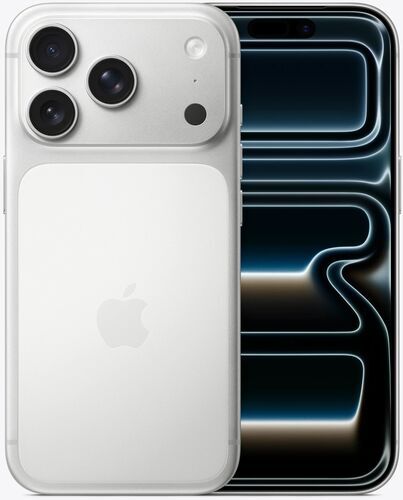

Choose your iPhone 17

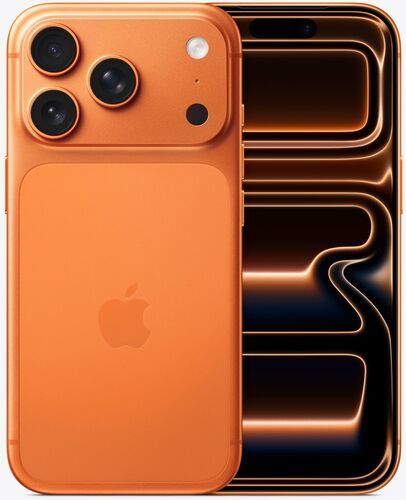


FAQs about the iPhone 17 production process
Where is the iPhone 17 made?
Components come from Japan, Korea, Taiwan, and China, and final assembly happens in China and, increasingly, India. No single country builds an iPhone 17 start to finish. The most advanced parts, screens, chips, memory, sensors, still travel in from established East Asian suppliers even when final assembly happens elsewhere.
Is the camera the most expensive part to build?
Yes, according to industry cost estimates: the iPhone 17 Pro’s triple camera system is the priciest component group in the phone. Apple hasn’t confirmed the exact figures, so treat the dollar amounts as informed rumour rather than an official cost breakdown.
Which iPhone 17 model has the smallest environmental footprint to build?
The standard iPhone 17, per Apple’s own environmental report. Its enclosure uses 85% recycled aluminum against 50% in the Pro and Pro Max, a direct trade-off for the Pro line’s aluminum unibody heat-sink design.
Does buying refurbished avoid these costs?
Yes. A refurbed iPhone 17 is professionally tested, cleaned, and warrantied instead of built from scratch, so every unit sold this way is one fewer phone that has to go through the entire production process above.
Skip the next production run: buy refurbished
Choose the iPhone 17 model that fits your life: professionally tested, backed by warranty, and one less new build for the planet to absorb. Every refurbed purchase picks up where a production run left off, instead of starting a new one.


Sign up for our newsletter for the first time and save €15!
Never miss an offer again.
Information about the use of personal data can be found in our Privacy policy.
Get the refurbed app
For iOS and Android


Confirm sign-up
Click the link in our confirmation e-mail to receive your voucher. It will be applicable to purchases from €200.
- © Refurbed Marketplace GmbH
- Accessibility
- T&C
- Privacy Policy
- Imprint
- Legal Notices
- European Data Act
- Cookie Policy