Unlocking nature’s secret: Enhanced Rock Weathering with Carbony
by Katrin Müller, on Jan 27, 2026Back in early 2024, we introduced Enhanced Rock Weathering (ERW) as one of the most exciting “nature-inspired” ways to remove carbon dioxide from the atmosphere. Today, we want to give you an update on our progress with our ERW project partner Carbony, why we still back it, and what ours and Carbony’s plans for the future are.
Photo by Zoltan Tasi
First things first: what’s carbon removal again?
Carbon removal means actively taking CO₂ out of the air and storing it for the long term. That’s different from reducing emissions (stopping CO₂ from entering the atmosphere in the first place) – and it’s also different from our landscape restoration projects (like EthioTrees in Ethiopia in the past and CommuniTree in Nicaragua today), where CO₂ is stored mainly in biomass and ecosystems through reforestation and restoration.
We still believe we need both:
- Landscape restoration for near-term impact and biodiversity and community co-benefits
- Carbon removal technologies that can scale over time and store carbon for much longer
You can find out more about carbon removal here. Across the years, many carbon removal technologies have been invented. Some include large-scale carbon dioxide removal plants while other companies and start-ups focus on more natural processes such as Enhanced Rock Weathering (ERW).
ERW explained: binding CO₂ with rock
ERW speeds up a process the Earth already does naturally. In nature, certain rocks slowly break down (“weather”) and bind CO₂, ultimately storing it in stable forms.
Enhanced rock weathering accelerates that by:
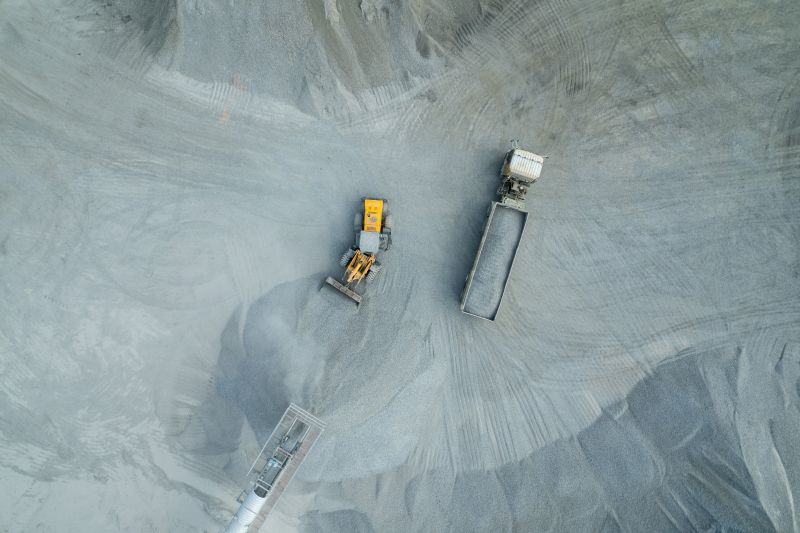
1) Crushing silicate rocks into fine particles
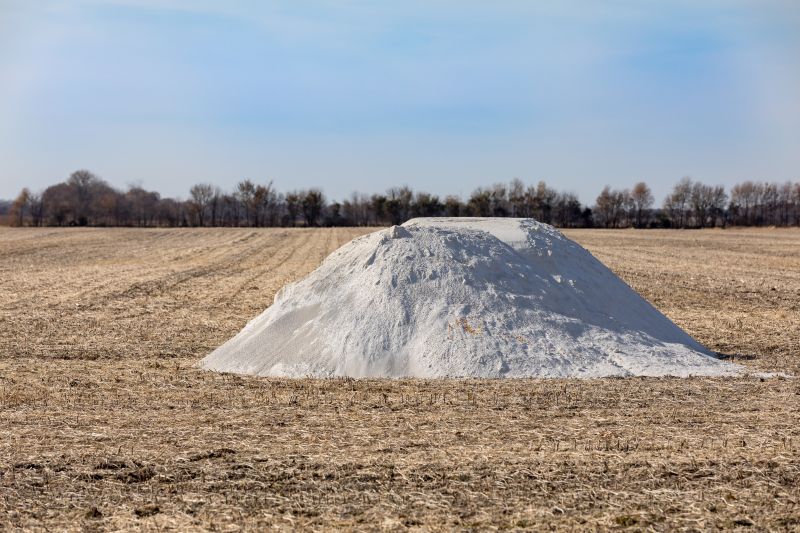
2) Spreading them on soils (often farmland)
3) Letting the rock react with CO₂, water and air over time – forming stable minerals and locking carbon away for extremely long periods
In our Carbony project, ERW is applied on soil in Bulgaria as part of Carbony’s European ERW work. Carbony’s approach is very “soil first”: they focus on non-farmland plots (to avoid competition with food systems), screen sites for geology/soils/hydrology, use highly reactive fine rock powder so reactions happen over years to decades (not centuries), and dose conservatively while monitoring ecosystem health. They also emphasise robust Measurement, Reporting and Verification(MRV) and conservative accounting – only delivering certified credits and not claiming what’s uncertain.
In comparison to landscape restoration projects or tree planting initiatives, ERW focusses on removing CO₂ and storing it with very high permanence, using a hybrid of nature + engineering. The volumes today are smaller, but the long-term potential is huge.
This difference matters, because science (e.g. IPCC, International Energy Agency) shows even strong nature-based action won’t be enough on its own: innovative carbon removals are increasingly seen as necessary to meet climate goals – and they need funding to mature and scale.
Find out more in our previous blog post.
© Carbony
What’s new at Carbony
Since the start of the project Carbony has built a highly rigorous ERW project near Sofia (Bulgaria) with carefully selected soils, high-quality material sourcing (olivine), and five different measurement approaches to reliably prove carbon removal. This “best-in-class” setup lays the foundation for scientific credibility and certification.
In 2026, the focus is on collecting field data and certifying the project. Together with Isometric, the first global certifier for ERW, Carbony aims to be among the first companies to issue high-quality, independently certified ERW credits.
What comes next: scaling-up ERW across Europe. Certification will show that permanent carbon removal can be done credibly and locally. This will provide a blueprint for much larger impact in the future.
Why we still back Carbony (even though it’s “smaller” today)
A key reality we’re transparent about: engineered carbon removal is still early-stage. It’s more complex, it’s often more expensive, and the current volumes are low compared to landscape restoration. But that’s exactly why early support matters and makes all the difference for project developers like Carbony.
Our Carbony project is designed with a strong R&D focus, including researching co-benefits beyond carbon removal such as soil health, water storage, and plant resilience. And ERW aims for very long-term storage with permanence in the range of 10,000–100,000 years.
So yes: the direct net impact today is smaller. But we’re supporting a method we believe can (or even needs to) become a meaningful lever in the future.
Our Carbony support in the past and future
We have supported Carbony since 2024 and have committed to removing more than 160 tonnes of CO₂ in the future through ERW. In 2026, we plan to add another 60 tonnes of CO₂e.
Since 2025, we’ve also simplified our approach: ERW with Carbony is the only carbon capture/removal project we currently invest in. That means we no longer invest via Patch. This focus is intentional. Our carbon removal budget is limited, and we want to concentrate it where we can build depth, learn closely with a partner, and support a technology that is still small today—but has real potential to scale and deliver outsized benefits over time.
© Carbony
The bigger picture
Buying refurbished is still our biggest lever: it avoid emissions, e-waste, and resource extraction compared to buying new electronics - as proven by our ISO 14040/44-verified calculation model. At refurbed, we want to go even further and therefore support a diversified impact investment portfolio. You can read about the latest updates in two more impact areas: