Doubling down on e-waste: what’s new in our minimise partnership
by Katrin Müller, on Mar 4, 2026In early 2024, we shared why refurbed teamed up with minimise to fight e-waste (see our blog post). This is the update – because the e-waste challenge is growing fast, and because our work with minimise has evolved from “phones only” to much more scalable, real-world e-waste collection and recycling.
© minimise
Why we invest in e-waste collection and recycling in the Global South
E-waste is one of the fastest growing waste streams on the planet. In 2022, the world generated a record 62 million tonnes of e-waste – and only 22.3% was documented as properly collected and recycled. Even worse: global e-waste is projected to reach 82 million tonnes by 2030, while the documented recycling rate is expected to fall if systems don’t improve (see Global E-Waste Monitor 2024).
Where does the rest go? Too often, e-waste generated in the Western world illegally ends up in places where waste management systems are underdeveloped – and where informal recycling can mean open burning and unsafe dismantling. Informal and unsound e-waste recycling releases toxic substances which are not only causing severe environmental issues, but also pose serious health risks to workers and nearby communities.
That’s why we focus part of our impact investments on the e-waste sector in the Global South: because the gap between “e-waste generated” and “e-waste safely treated” is huge – and because funding safe collection and recycling schemes can prevent pollution while supporting livelihoods.
© minimise
What minimise does (and what makes the approach different)
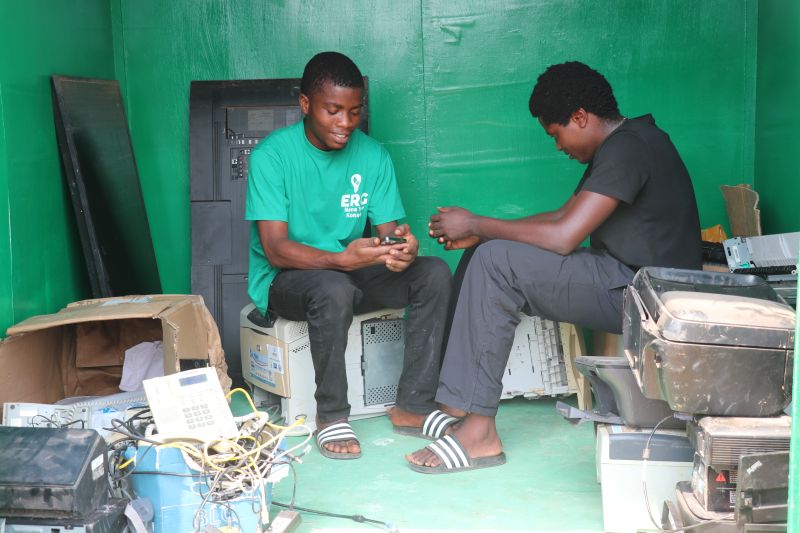
minimise works through a network of local partners and helps connect the “first mile” of collection with formal, environmentally sound recycling. A big part of the challenge globally is that a lot of collection happens informally where the work is often underpaid, unsafe, and not properly documented. minimise tackles this by:
- supporting local partners who financially incentivize informal collectors to switch to collection and hand-over of e-waste to formal collection plants
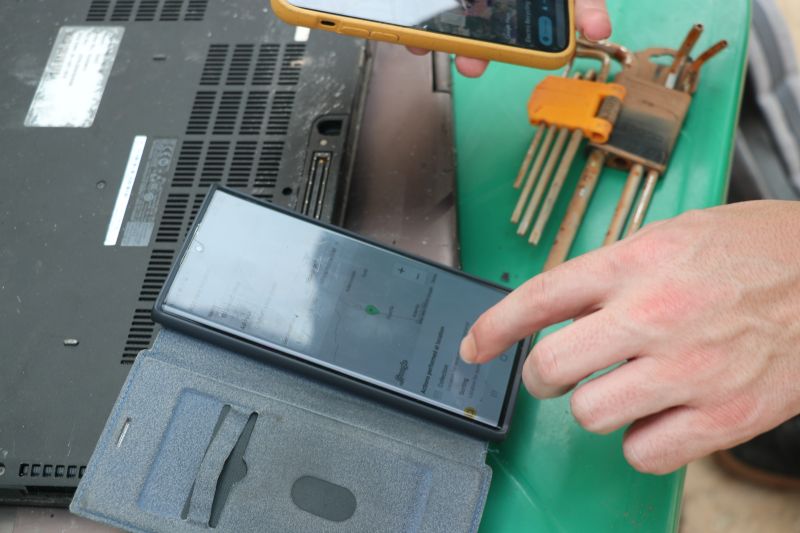
- using software to document each step (origin, category, locations, recovered materials, safe disposal), so the outcome becomes traceable and verifiable
- issuing digital proof-of-recycling based on verification – so impact is not just claimed, but evidenced
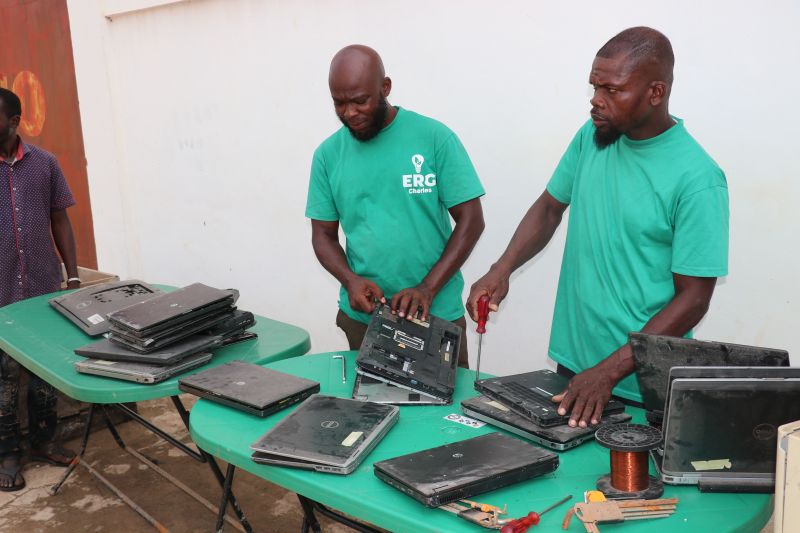
- explicitly designing projects around safer practices, skill-building, and local capacity (training, professional equipment, and better processes)
In short: the goal is not only to “collect more”, but to make recycling safer, fairer, and more transparent – and to help build a local recycling economy rather than pushing waste elsewhere.
© minimise
Our impact so far – and why we’re doubling down in 2026
Our partnership with minimise has supported projects across different countries, and we’ve scaled the approach significantly:
- 2024: 50,000 phones collected and recycled in Ghana (≈ 2,700 kg of e-waste)
- 2025: shifted from “phones only” to mixed e-waste – enabling 15,000 kg collected and recycled across projects in Mexico and Zambia (still ongoing)
- 2026 (planned): 20,000 kg in Ghana – and in 2026 we’re focusing on Ghana only so we can go deeper, tell the story properly, and show the work up close
So why focus more on e-waste in 2026?
We truly believe that our biggest contribution is making refurbished the first and easy choice. Our ISO 14040/44-verified calculation model proves this alone avoids 76–96% of e-waste (depending on the product) compared to buying new smartphones, tablets or laptops.
Extending a device’s life is the most effective way to prevent waste in the first place but even the most-used device reaches an end point eventually. In addition, refurbishment does not eliminate all e-waste but sometimes also relies on spare parts being used in preloved devices. Evidently this too causes e-waste – albeit much less than a new product would. That’s why e-waste collection and recycling still matters: it’s a necessary solution further down the waste hierarchy for the tech that can’t be refurbished anymore or relies on new parts. With minimise, we want to help make sure that end-of-life is handled safely and responsibly.
In 2026 you will hear more about e-waste from us because we believe it is very closely connected to our business model and our products. As refurbed, we want to rethink new and change the way we consume. This includes convincing consumers to keep their tech in use longer (and buy refurbished when they do replace it), but also telling them about the consequences of our growing tech-dependency. We believe we need to talk honestly about end-of-life – and support partners like minimise who are by our side in the fight for a more circular economy.
Curious to find out more about our other impact investment partners: